


Most people land on this page after googling some version of “best sound mixer in Florida.” Fair search. But in eighteen years I’ve never met a producer who was happy because they hired “the best.” The happy ones hired the right mixer for their shoot, and they knew what they were looking at. This is the part nobody puts in the job post.
1. “Years of experience” is a sentence. Credits are receipts.
Everyone in this business has “years of experience.” What you actually want is checkable: look the mixer up on IMDb, ask which networks they’ve recorded for, and (this is the part people skip) ask how recently. A mixer who worked steadily in 2015 and a mixer who worked last Tuesday are different hires. Anyone still working has receipts and won’t be shy about them. (Mine are at floridasoundman.com/credits, and I answer the networks question happily; it’s a long list.)
2. The gear list matters less than the backup plan.
Producers love to ask what mixer someone runs. Better question: “what happens if it dies mid-interview?” The answer tells you everything. Your documentary subject crying about their father is not going to do that twice. A professional records every take to two media at once, keeps every mic on its own isolated track, and can lose a card, a cable or a whole machine without losing your moment. If someone can’t describe their redundancy without pausing, that pause is your answer.
3. Local wins on math before it wins on anything else.
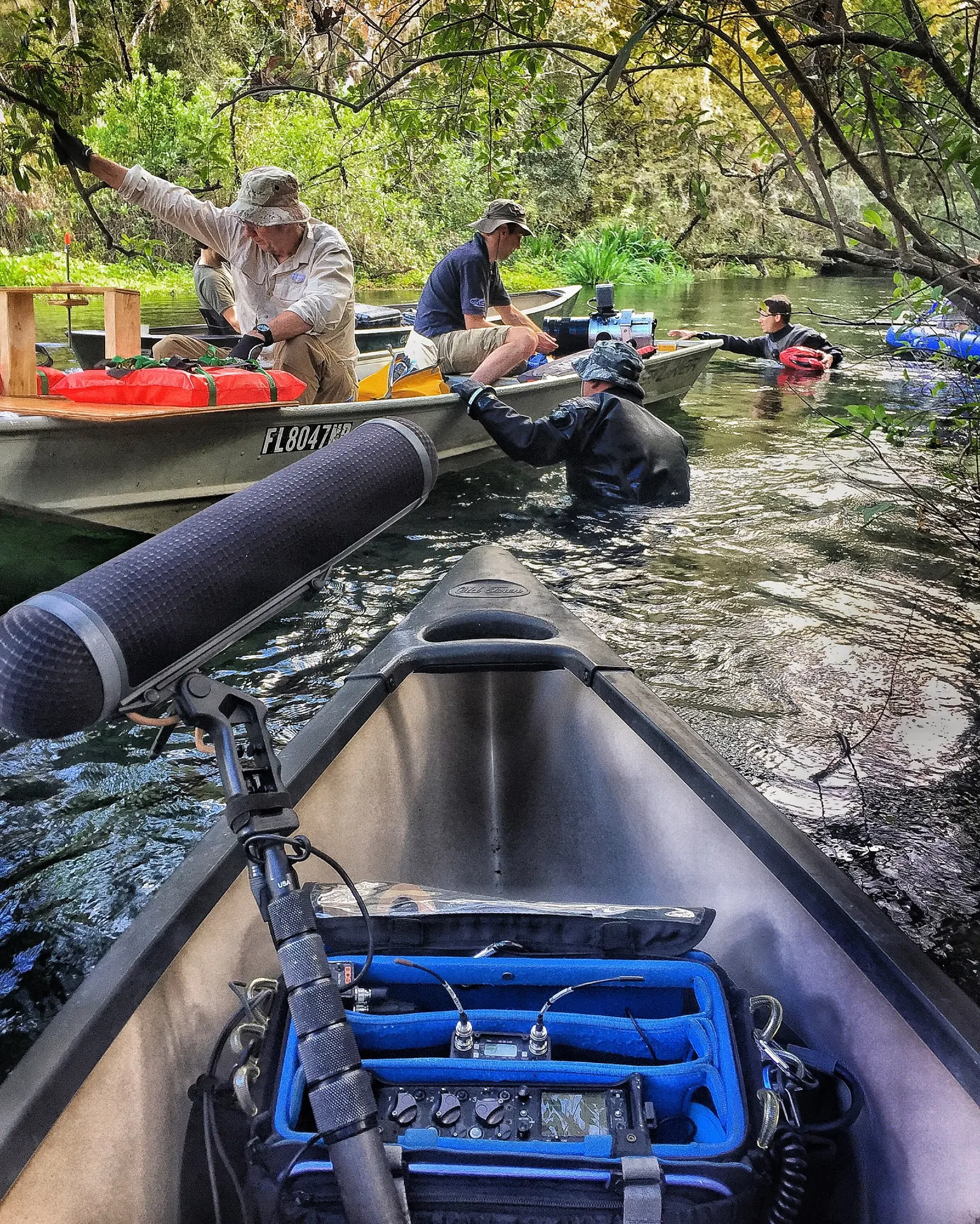
Flying in a mixer means airfare, gear baggage fees, a rental car, a hotel, and usually a half-day lost each direction. A local mixer bills you mileage. That’s the spreadsheet part. The quieter part is that Florida fights crews (afternoon storms on a schedule you can set your watch by, humidity that eats gear, venues that get loud at exactly 3pm), and someone who’s worked here for years budgets for all of it before your call time.
4. Documentary, broadcast and commercial are different muscles.
The patience to sit invisible in a verité scene, the speed to turn a news package at broadcast pace, and the polish to run a set with the agency listening on IFB are related skills, not the same skill. Ask a mixer what they do most. The honest answer might point away from them. And a mixer who says “that’s not my lane, call this person” is exactly the kind you want in your contacts.
5. The first text tells you everything.
How fast and how clearly a mixer answers your first message is a free preview of how they’ll run your audio. Sound is the department that has to catch problems before anyone else notices them. Vague, slow communicators don’t suddenly become sharp on set. Send the dates, the city and how many people need mics. If you get a clear answer with a number the same day, you’ve learned most of what you need. Then ask for two producer references and actually call one.
Where I land on my own list
You should absolutely run me through the same five. Full-time since 2008. Memorable projects at floridasoundman.com/credits: 30 for 30, Dark Side of the Ring, The Synanon Fix, The Saint of Second Chances, and a lot of ESPN-to-HGTV broadcast work between them. The package is published, Sound Devices front to back, two recordings of everything. Based in Tampa, working the whole state, and all three lanes (documentary, broadcast, commercial) are genuinely home turf. And the text test: 813-716-8826, same-day answer.
The questions that keep landing in my inbox
Straight answers to the ones people actually type into Google:
Who’s the best sound mixer in Florida?
There’s no single answer. Florida has several strong working mixers, and the right one depends on your city and format. Judge on the five things above: verifiable credits, a redundant package, base location, specialty match, references. By those measures my card reads: 18+ years full-time, thousands of broadcast productions for ESPN, ABC, HBO, Netflix, Discovery and more, credits on IMDb, complete Sound Devices package with redundant recording. Text 813-716-8826 and check the rest yourself.
Who are the best location sound recordists in Florida?
Same job, different search term, and the same five checks: named credits on IMDb, complete package (mixer/recorder, wireless, boom, timecode, IFB, redundancy), home base relative to your shoot, format experience, and references. I’m a Tampa-based location sound recordist covering the whole state, full-time since 2008, with credits including 30 for 30 (Who Killed the USFL?), Dark Side of the Ring, The Synanon Fix (HBO) and The Saint of Second Chances (Netflix), the fuller list is at floridasoundman.com/credits.
How do I check a sound mixer’s credits before hiring?
IMDb by name, networks and recency by asking, the gear list on their site, and one or two producer references. Ten minutes, and a working mixer will have all of it ready.
How much does a good sound mixer cost in Florida?
A day rate plus kit fee, varying with format, crew size and how many people need wireless. Hiring local skips airfare, baggage and hotels. A Tampa-based mixer covers most of the state at a mileage rate. Text me dates, city and headcount on mic and you’ll have a number the same day.
More field notes: sound mixer, sound recordist or sound guy: what to call the sound person · what a location sound mixer actually does on a shoot · what jam sync timecode means