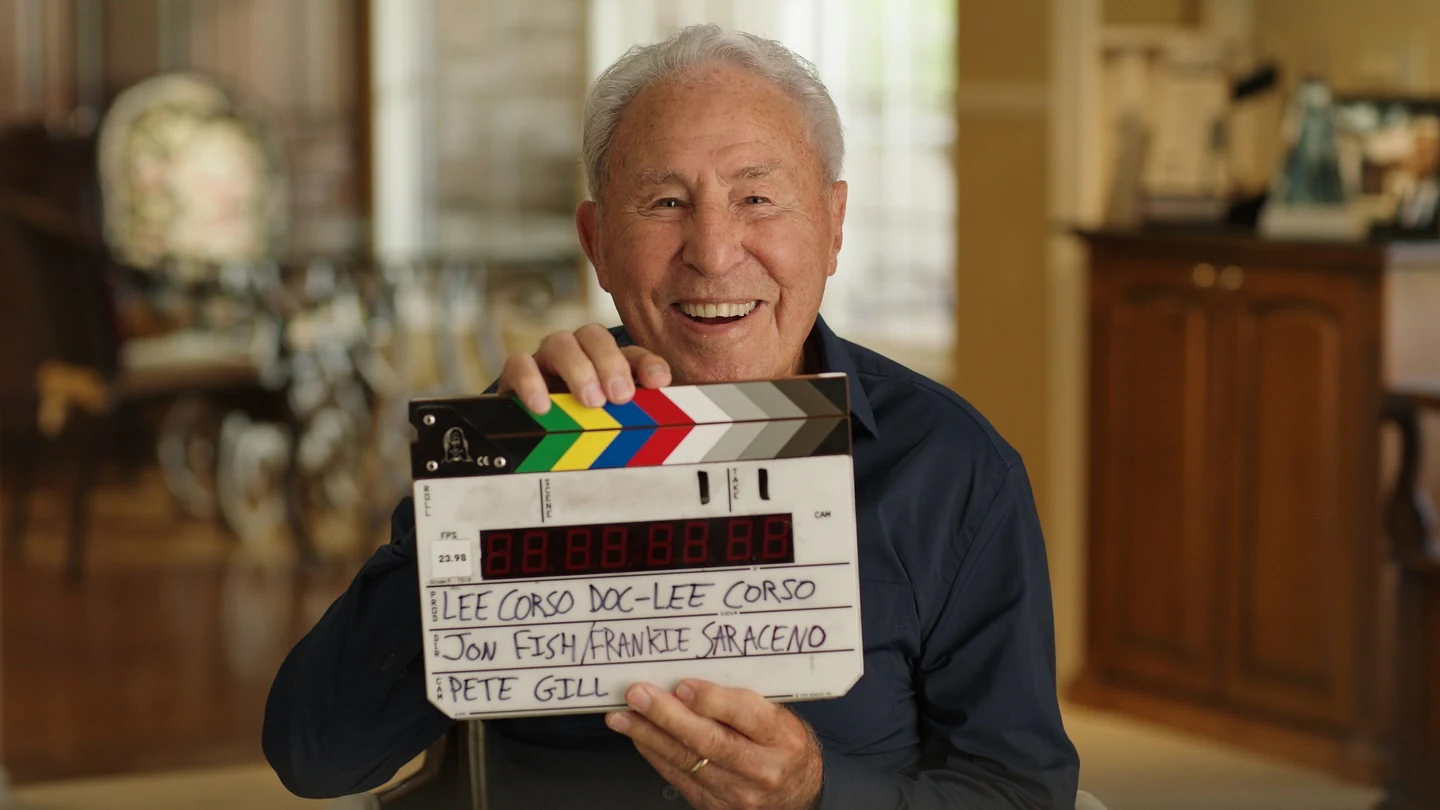


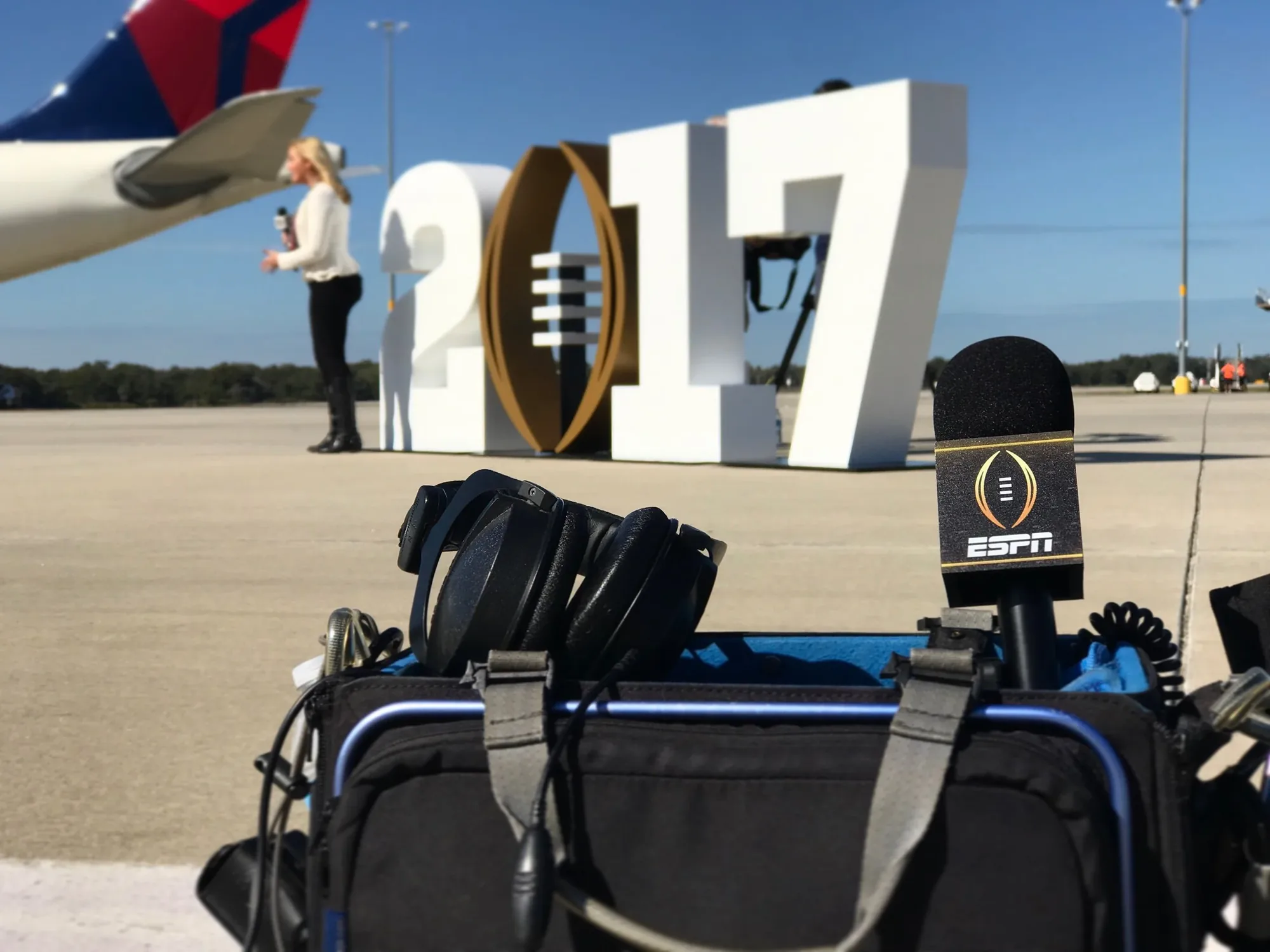


People call the job a few different things: location sound mixer, production sound mixer, sound recordist, boom operator, production sound, or just “the sound guy.” It’s all the same role: I’m the person on set responsible for everything your audience hears.
Here’s what that means on a normal shooting day.
Before we roll, I solve problems you’d never want to think about
Where’s the air conditioner that’s going to hum under every take? Is there a road, a generator, a refrigerator, a fluorescent light buzzing? I find those things early and work around them, so you’re not discovering them in the edit when it’s too late to fix.
I get everyone miked
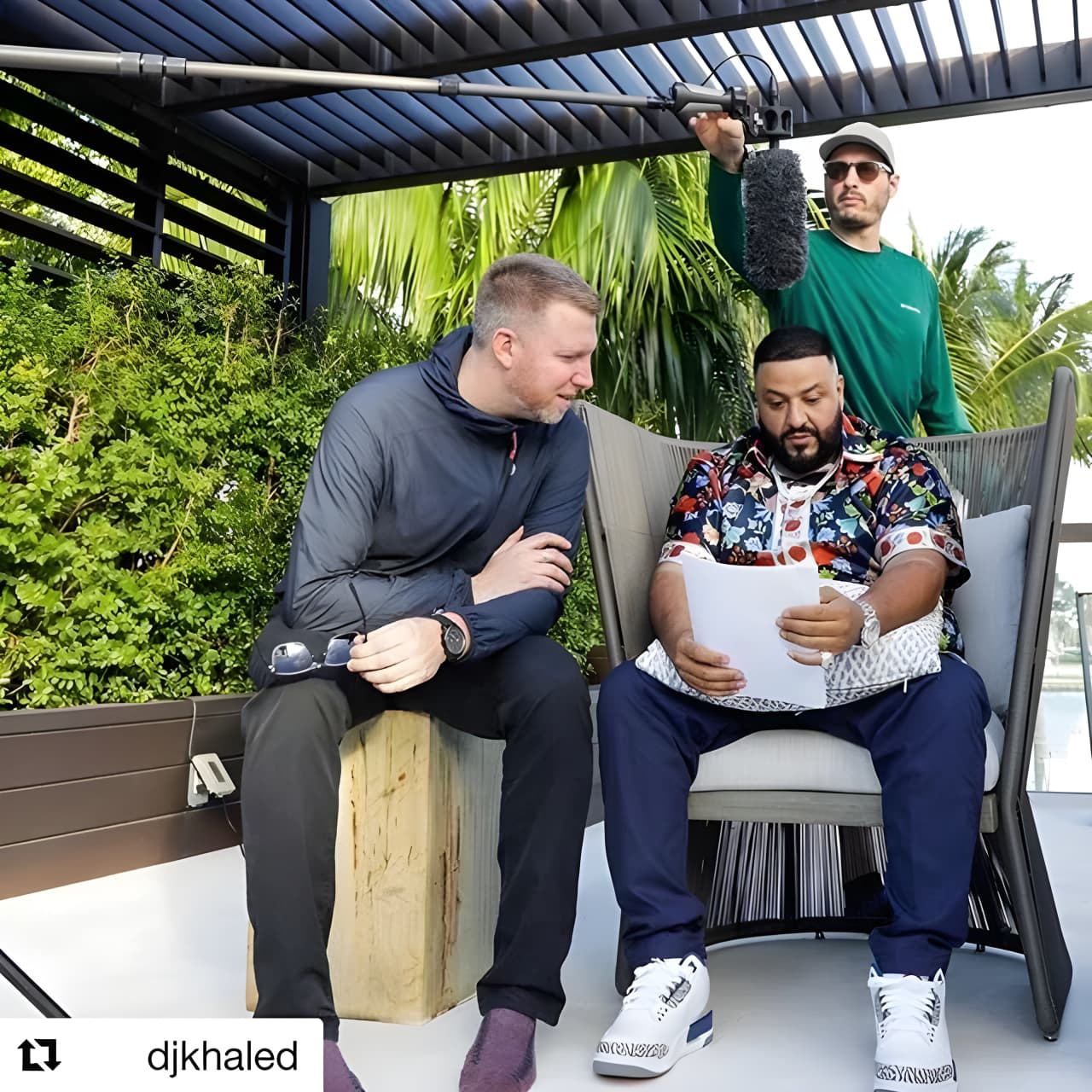
That’s wireless lavalier mics hidden in clothing for interviews and hosts, plus a boom mic overhead when the shot allows it. I’m watching for rustle, for wardrobe, for a lav that slipped, and fixing it between takes, not after.
I mix and record everything live
I’m balancing every microphone in real time and recording it all, with a backup recording running on every job. If a camera card fails or a file corrupts, your sound is still safe.
I keep the whole crew in sync
I jam timecode to every camera so your editor isn’t hand-syncing audio later. And when a shoot calls for it, I add IFB, a wireless feed so the director, client, and reporter hear exactly what’s being recorded as it happens (one of the extras I always have on hand).
When the location fights back
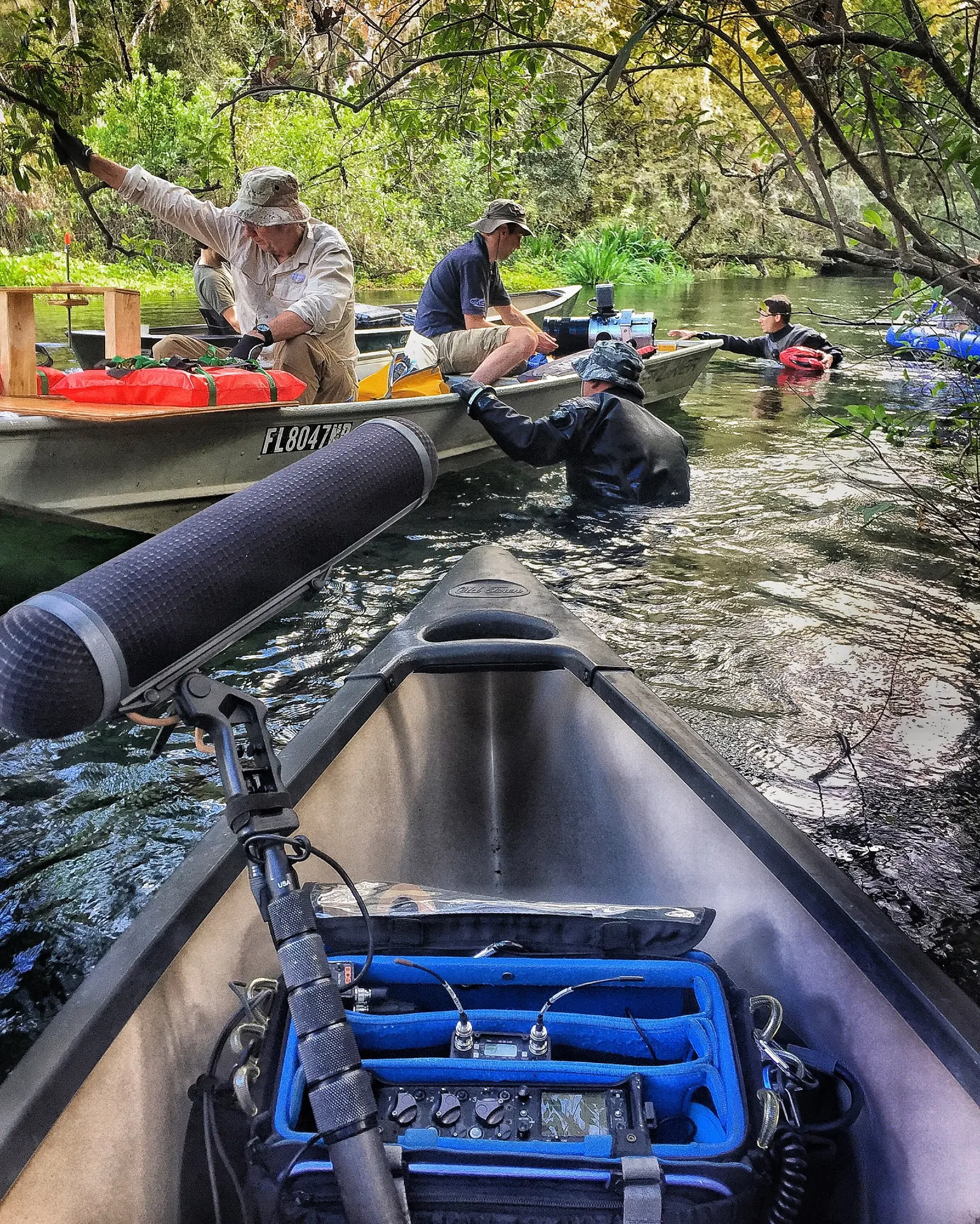
Rain on a metal roof, a boat going by, a crowd, a tight room with bad acoustics. Florida throws all of it at you. A big part of this job is staying ahead of the environment so the shoot keeps moving.
The short version: you hire a sound mixer so that audio is the one thing on set you never have to worry about. You point the cameras, run the interview, make your day, and the sound is handled.
More field notes: what a complete location sound package needs · what jam sync timecode means · how to hide a lav mic under a shirt without rustle