


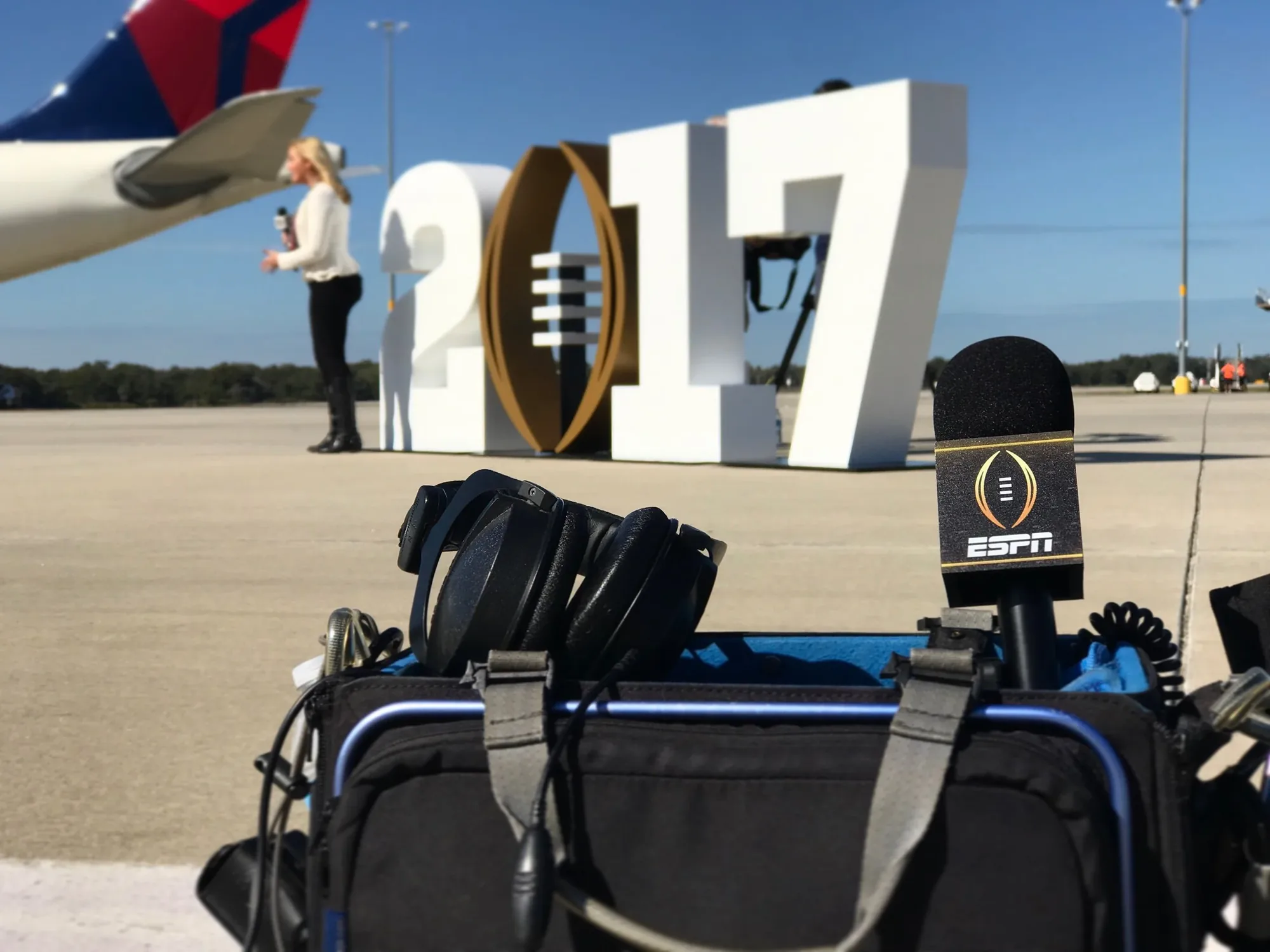

IFB stands for interruptible foldback. It's a feed of the audio sent back to somebody on a set, through a small wireless receiver and an earpiece, so that person hears what the microphones are hearing.
Here's the part that trips people up: two different things on a set both get called IFB, and only one of them is actually interruptible. One is the earpiece an on-camera person wears so a director can talk to them mid-take. The other is the listen-only feed the client and the director wear so they can hear the take while it's happening. Same three letters, two different jobs.
I've been full-time in location sound since 2008, based in Tampa and working all over Florida. Here's the version I'd give you on the phone, plus which one you're probably asking for.
Interruptible foldback, one word at a time
Each word in the name is carrying a piece of the meaning:
- Foldback: audio sent back to somebody on set. Program sound, the mix being recorded, a remote guest's voice, whatever that person needs in their ear.
- Interruptible: somebody at the other end can cut over that feed and speak straight to the person wearing it, live, while the camera's rolling.
- The earpiece: what an on-camera person wears. Usually a molded piece or a skin-tone acoustic tube in one ear, so they can still hear the room and the person across from them.
- The receiver: a small wireless bodypack that picks up the feed and drives the earpiece or a set of headphones.
- Interruptible feedback, interrupted foldback: you'll hear both. Same thing, and nobody says the long version out loud anyway.
The interruptible part is what separates a real IFB from handing somebody a pair of headphones. A host can be mid-sentence and hear "wrap it up" or "we're going to the remote" without the camera, the guest or the room knowing it happened.
Talent IFB: the earpiece somebody talks into
This is the broadcast version, and it's the one most people picture. Somebody on camera wears the earpiece, somebody at the other end has a microphone, and that voice can cut into the feed at any moment. It shows up on hosted, scripted and live-adjacent work:
- An anchor or host taking direction during a live segment.
- A reporter doing a remote hit and hearing the studio.
- A moderator getting time cues without looking at a clock.
- A spokesperson working from a producer's voice instead of a teleprompter.
- Anyone interviewing a guest who's on a screen instead of in the chair.
Two things have to exist for it to work: somebody at the other end with a microphone, and a rule about who's allowed to use it. The rule I'd argue for: one voice. The more people who can talk into somebody's ear, the worse the read gets.
Plenty of shoots need none of this. On a documentary interview or a standard corporate sit-down, nobody on camera is wearing anything, because the subject's talking to a person in the room instead of to a control room.
The other IFB: the feed the client and director hear
This is the one most producers mean when they email me, and it's the one I bring. Lectrosonics IFB: a wireless feed so the client, director and reporter hear exactly what's being recorded, while it's being recorded. On commercial and agency shoots that's the difference between an approval on set and a reshoot conversation later.
Strictly speaking, this one isn't interruptible. Nobody's talking into it. It's a one-way listen. The industry calls it IFB anyway and so do I, because correcting anyone about it on a call sheet helps nobody. You'll also hear people say comteks, after a brand name that drifted into being the generic word for the whole category.
It lives on my rate card as an add-on rather than something billed on every job, but it's in the case on every job, along with the rest of the kit.
How many people need to hear the take
That's the real question behind "do you have IFB," and it's a head count, not a crew count. Listeners can't take turns on one receiver, so the count matters. Here's how it usually shakes out:
- The director: yes, essentially always.
- The client and the agency: a feed each. Two people splitting a pair of earbuds isn't a plan.
- The producer or script supervisor: usually, especially anyone tracking dialogue against a script.
- The DP and the camera operators: usually not. They're watching a frame, and something in the ear is one more thing to snag.
Talent is a separate question and a separate piece of kit, and that's the interruptible half above. A corporate video shoot in a conference room usually has a short list; an agency commercial with a client and a creative team is where the count climbs.
What this means for your shoot
The question worth settling early is simple: how many people need to hear the take.
What I don't do: full comms. Party-line intercom for a whole crew, headsets for the grip department, IFB routed out of a broadcast truck. That's the A1 and A2 lane, and it's a different hire.
Text 813-716-8826 with what you're filming, the city and how many people need to hear it, and I'll tell you what the day needs. If you want the wider version, here's what's in a location sound package and how I work as a production sound mixer in Tampa.
Common questions
What does IFB stand for in television?
Interruptible foldback. Foldback is the audio routed back to somebody on the set; interruptible means a voice can override that audio and reach them directly, on the fly. You'll see it written as interruptible feedback as well. The initials are what anyone actually says out loud.
What's the difference between IFB and a Comtek?
In practice, nothing, and the words get swapped freely. Comtek is a manufacturer whose name drifted into being the generic term for the small wireless receivers a director or client listens on. That's one-way monitoring rather than a true interrupt, since nobody is speaking into it. Mine are Lectrosonics.
Does my on-camera talent need an IFB earpiece?
Only if a voice has to reach them while they're on camera: live direction, a studio feed for a remote hit, timing cues, an interview with somebody appearing on a monitor. If your talent is simply speaking to an interviewer sitting across from them, an earpiece puts hardware in the frame and solves nothing.
How many IFB receivers do I need on set?
Work from the number of people who need to hear the audio live, not from the size of the call sheet, and assume nobody shares. Usually that's the director plus whoever is approving the take. Text 813-716-8826 with your shoot type, city and that head count, and I'll confirm what the day calls for.
More: commercial and agency shoots · the rest of the kit · A corporate video shoot in a conference room · the A1 and A2 lane
More field notes: how to hide a lav mic under a shirt without rustle · what room tone is and why I ask for thirty seconds · hiring local sound in Florida vs. flying a mixer in